How camping works
The onsen after the tent
After a night on the ground, few things feel better than a hot spring bath. Here is how to find one near camp, how to behave in it, and how to time it.
- Best months
- All year, best in autumn
- Getting there
- Short drive or bus from most campgrounds
- Pack
- Small towel, large towel, coins, a change of clothes
Before you go
- Check the day-use hours and last admission time
- Wash and rinse fully before entering the bath
- Keep your small towel out of the water
- Check the tattoo policy before you go
- Drink water before and after bathing
- Get back before the campground gate closes
Japan sits on a great deal of volcanic heat, and many of its best camping areas are close to hot spring towns. Nasu, Nikko, the Izu Peninsula, Kamikochi and much of Hokkaido all have onsen within easy reach of their campgrounds. A soak after a day of walking or a cold night in the tent is one of the real pleasures of camping in Japan, and some campgrounds even have their own bath.
Day-use baths near campgrounds
The kind of hot spring you will use most as a camper is the higaeri onsen, the day-use bath. These range from small wooden bathhouses run by a village, to large public facilities with several indoor and outdoor pools, a restaurant and a rest area with tatami mats. Many hot spring hotels and inns also open their baths to day visitors at certain hours.
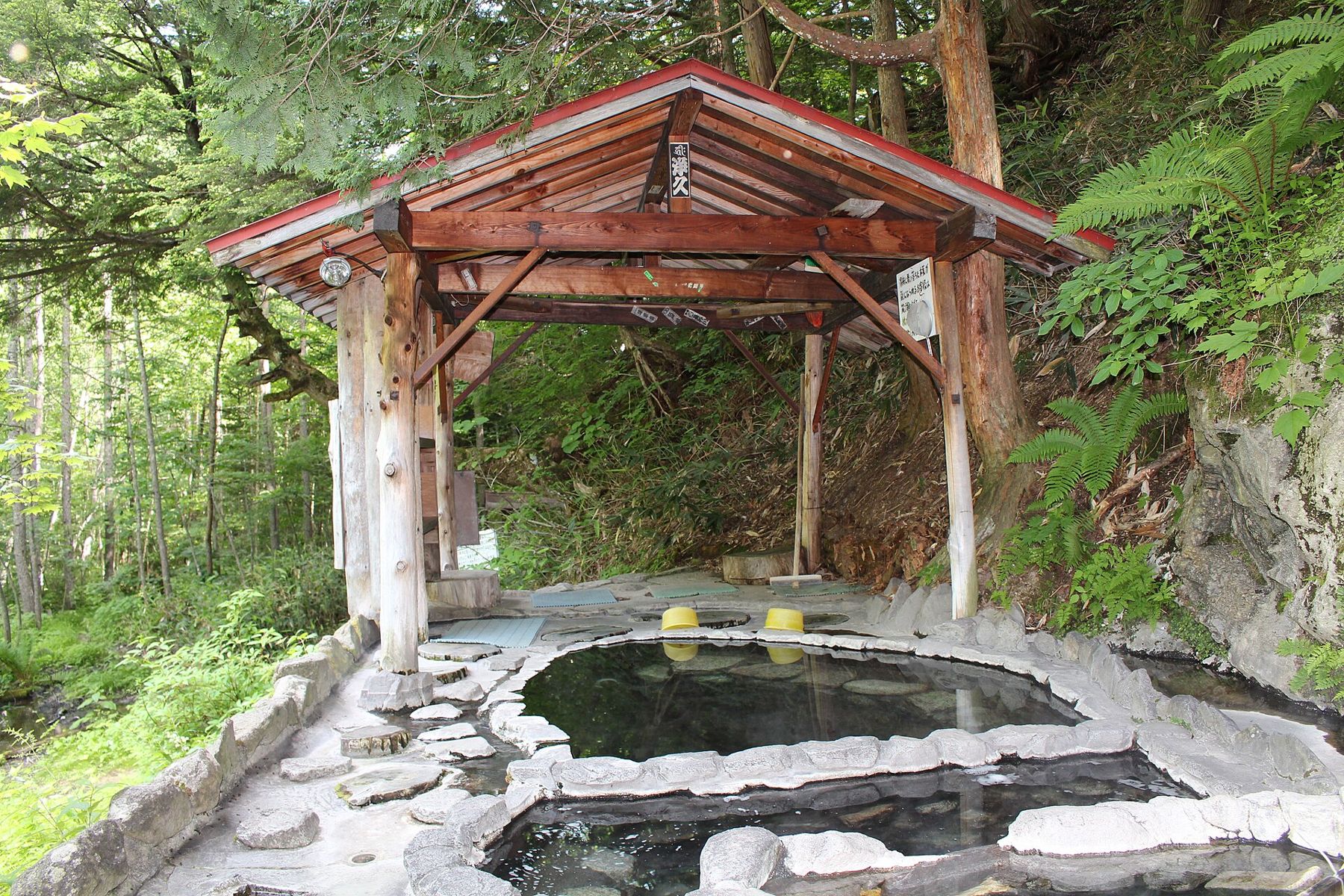
The outdoor bath, the rotenburo, is what most visitors hope for: a pool of hot water among rocks or trees, open to the sky. Some are simple tubs under a wooden roof by a stream; others are large and landscaped. Many campground caretakers keep a list or map of nearby baths, so ask at check-in which ones locals use.
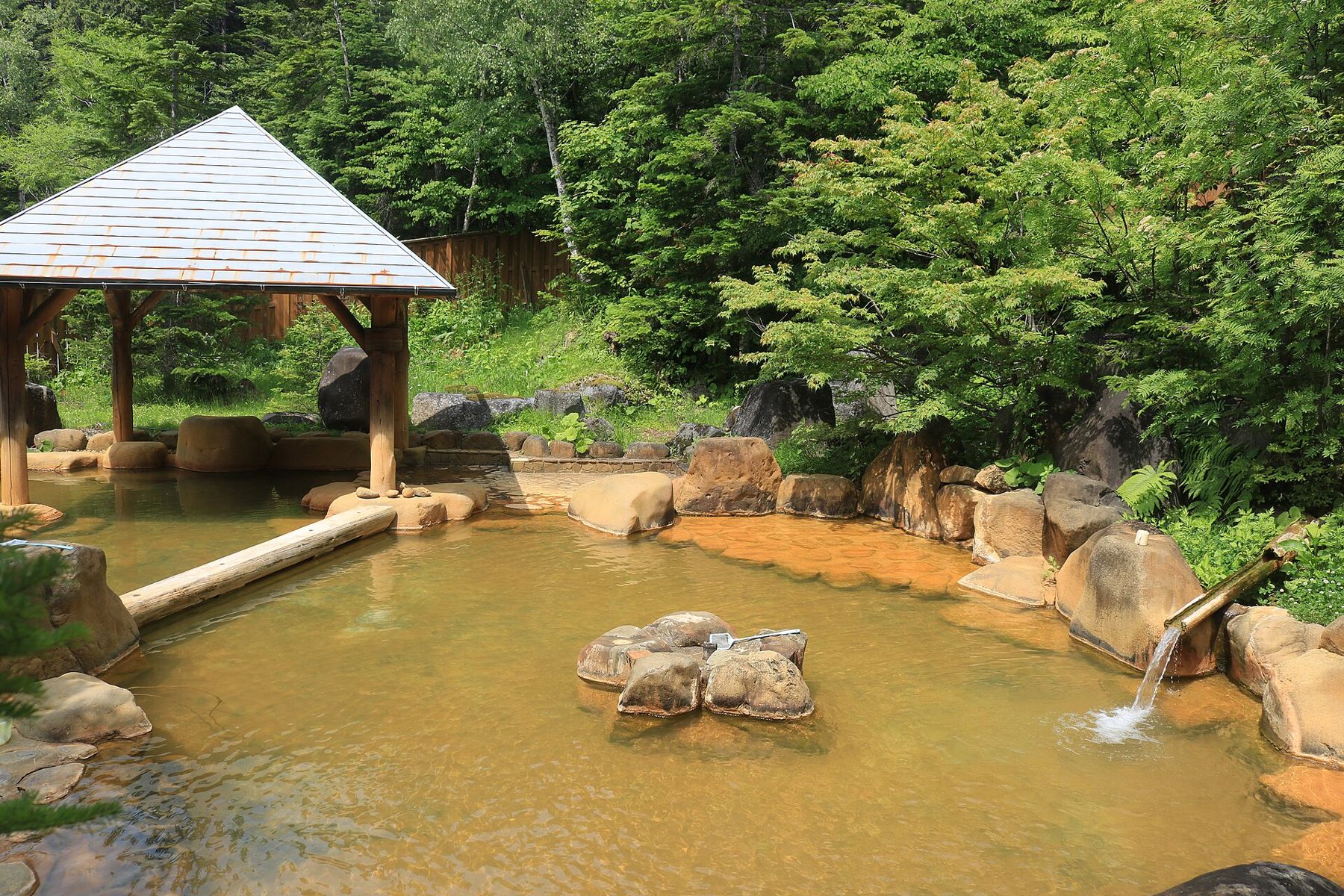
Each spring has its own character. Some water is clear and almost scentless; some is milky white and smells of sulphur; some, like the bath in the photo at the top of this page, is stained orange-brown by iron. Notice boards at the entrance list the minerals and the conditions the water is traditionally said to help. A few hot spring towns also have small communal bathhouses, kyōdō-yu, maintained by residents. Some welcome visitors for a small fee, while others are for locals only, so look for a sign or ask before you go in. Where a campground has its own bath or coin shower, it is usually simpler, with shorter hours.
How to bathe
The routine is the same almost everywhere, and it is easy once you have done it once.
- Pay at the entrance, often at a ticket machine, and leave your shoes in the shoe lockers or on the shelves.
- Go to the right changing room. Blue or the character for man usually marks the men's side, and red or the character for woman marks the women's. Some baths swap sides on certain days, so check every visit.
- Undress completely and put your clothes in a basket or locker. Swimsuits are not worn in a normal onsen.
- Take only your small towel into the bathing area. Sit on a stool at a washing station and wash your whole body and hair thoroughly, then rinse off all the soap.
- Enter the bath slowly. Keep your small towel out of the water: rest it on your head or on the edge.
- Tie up long hair so it stays out of the water, and do not swim, splash or dunk your head.
- Before returning to the changing room, wipe yourself with the small towel so you do not drip on the floor.
Talk quietly, do not take photos, and keep phones in the locker. Many people bathe in silence, and an outdoor bath at dusk can be very still.
Tattoos
Tattoos are the most common worry for visitors. Many onsen have long refused entry to people with tattoos, and some still do. Others now welcome all visitors, while some allow small tattoos covered by a skin-coloured patch. Policies differ from one bath to the next, even within the same town, and they change.
 another page in the bookBooking, check-in and quiet hours at Japanese campgrounds
Check before you go, either on the bath's own information or by asking the campground or tourist office. A private bath that you book by the hour, the kashikiri bath, is a good option if you are unsure; it is also useful for families with small children or anyone who would rather not bathe with strangers. Whatever the policy, respect it at the door.
Timing the bath around camp life
The main practical point for campers is timing. Day-use hours often end in the evening, and the last admission is earlier than the closing time. At the same time, many campgrounds close the vehicle gate in the evening and start quiet hours soon after. If you drive to a bath after dinner, you may come back to a locked gate, or arrive in the middle of quiet hours and disturb your neighbours with car doors and headlights.
The simplest pattern is to bathe in the late afternoon, after setting up camp and before cooking dinner. The baths are often less crowded then, and you return to camp warm and ready to eat. The other good time is the next morning on the way home, after check-out. Read the guide to check-in and quiet hours for how gate times usually work.
Safety in hot water
Hot springs can be very hot, and some are strongly mineral. Drink water before and after bathing, and get out if you feel dizzy. Short soaks with breaks are better than one long one. Do not bathe after drinking alcohol, and be careful going from a cold outdoor area into very hot water in winter, when sudden temperature changes put strain on the heart. People with heart or blood pressure conditions should be cautious.
A few rural springs are konyoku, mixed baths, where men and women share the water. Some allow bathing wraps or towels; others do not. If you visit one, follow the posted rules. Natural pools by rivers or in the wild can be unmaintained, unexpectedly hot, or affected by volcanic gas, so use only established baths, and obey any closures or warnings.
What to bring
A small towel for washing and modesty, a larger towel for drying, and a change of clothes. Many baths provide soap and shampoo, while smaller village bathhouses may not. Coins are useful for lockers, ticket machines and hairdryers. In winter, bring a warm hat for the walk back to the car or tent; the guide to snow camping has more on staying warm after the bath. Opening hours, fees and tattoo policies change, so check them before you go.