Aomori Prefecture
Lake Towada and the Oirase Stream
A deep caldera lake in the beech forests of northern Tohoku, and the clear stream that pours out of it, best walked slowly in the green of summer or the red of October.
- Best months
- Late May to October
- Getting there
- Seasonal bus from Aomori or Hachinohe
- Pack
- Rain shell, bear bell, warm layer for lake nights
Lake Towada lies on the border of Aomori and Akita prefectures, in the far north of Honshu, in Towada-Hachimantai National Park. It fills a double caldera, so the shoreline curls around two peninsulas that reach into the water from the south, and it is one of the deepest lakes in Japan. The surrounding hills are covered in beech and mixed forest, which turns brilliant red and gold in October.
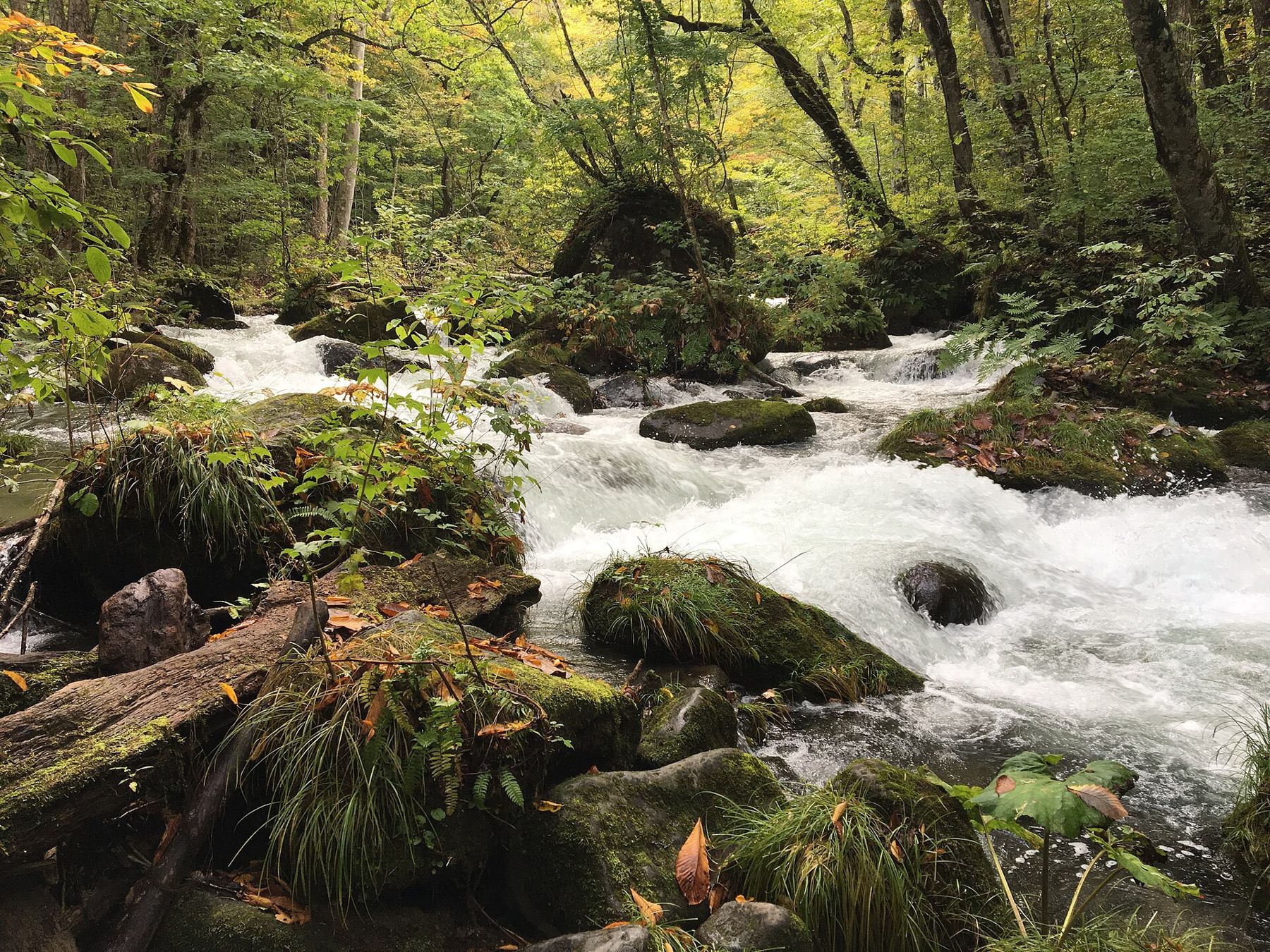
Out of the lake's eastern shore flows the Oirase Stream, the lake's only outlet, which runs through a narrow gorge full of moss, waterfalls and old trees. Together, the lake and the stream make one of northern Japan's classic camping trips: a night by the water, a long walk beside the stream, and an onsen to finish.
The caldera lake
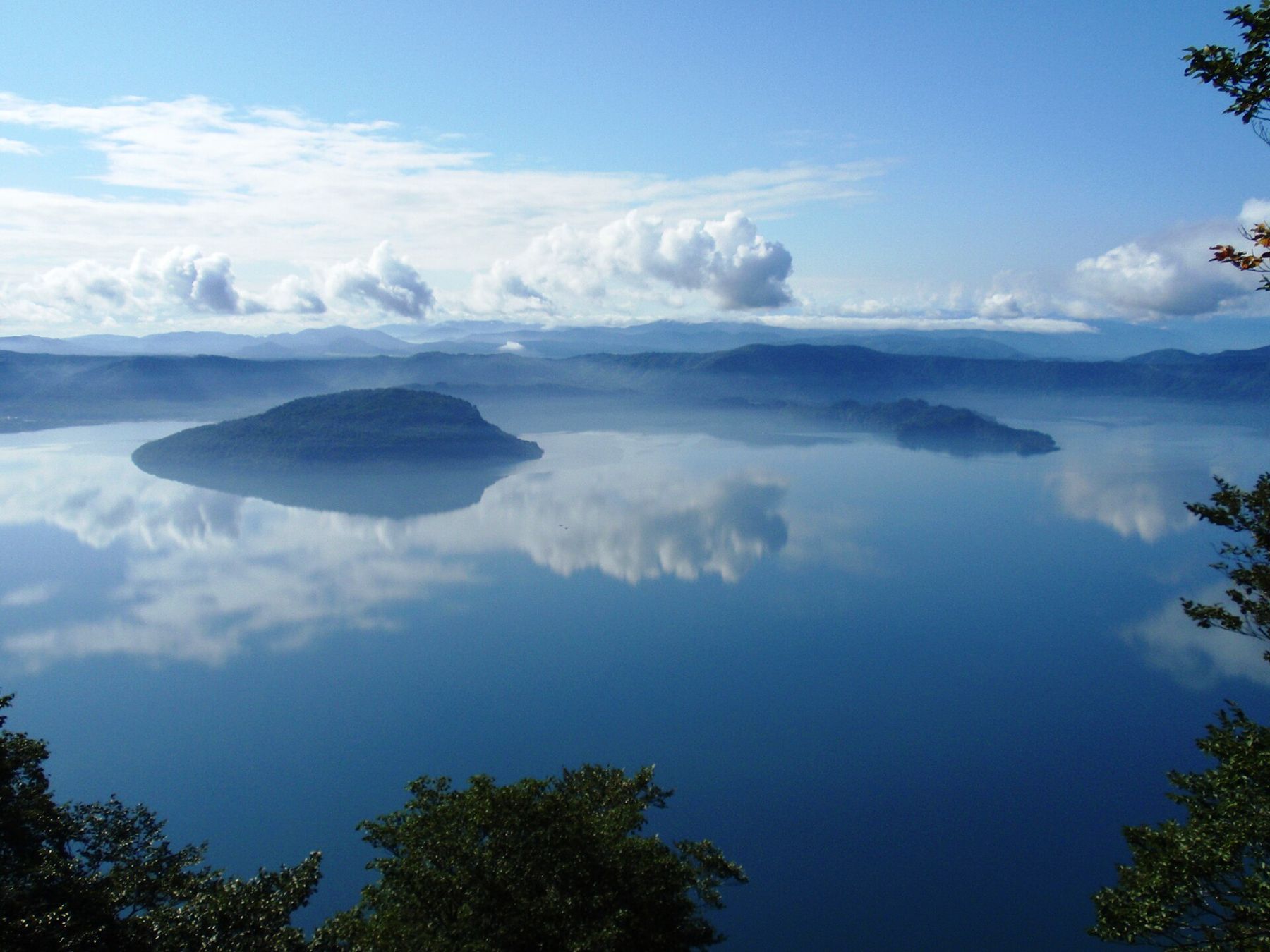
The lake is a broad, quiet sheet of water, its colour shifting from pale blue in summer haze to deep navy on clear autumn days. From the lookouts on the rim roads, such as those on the outer ridge to the north, you can see the full shape of the caldera and the two peninsulas reaching into it. On a still morning, the islands and forested shores are reflected almost perfectly in the water.
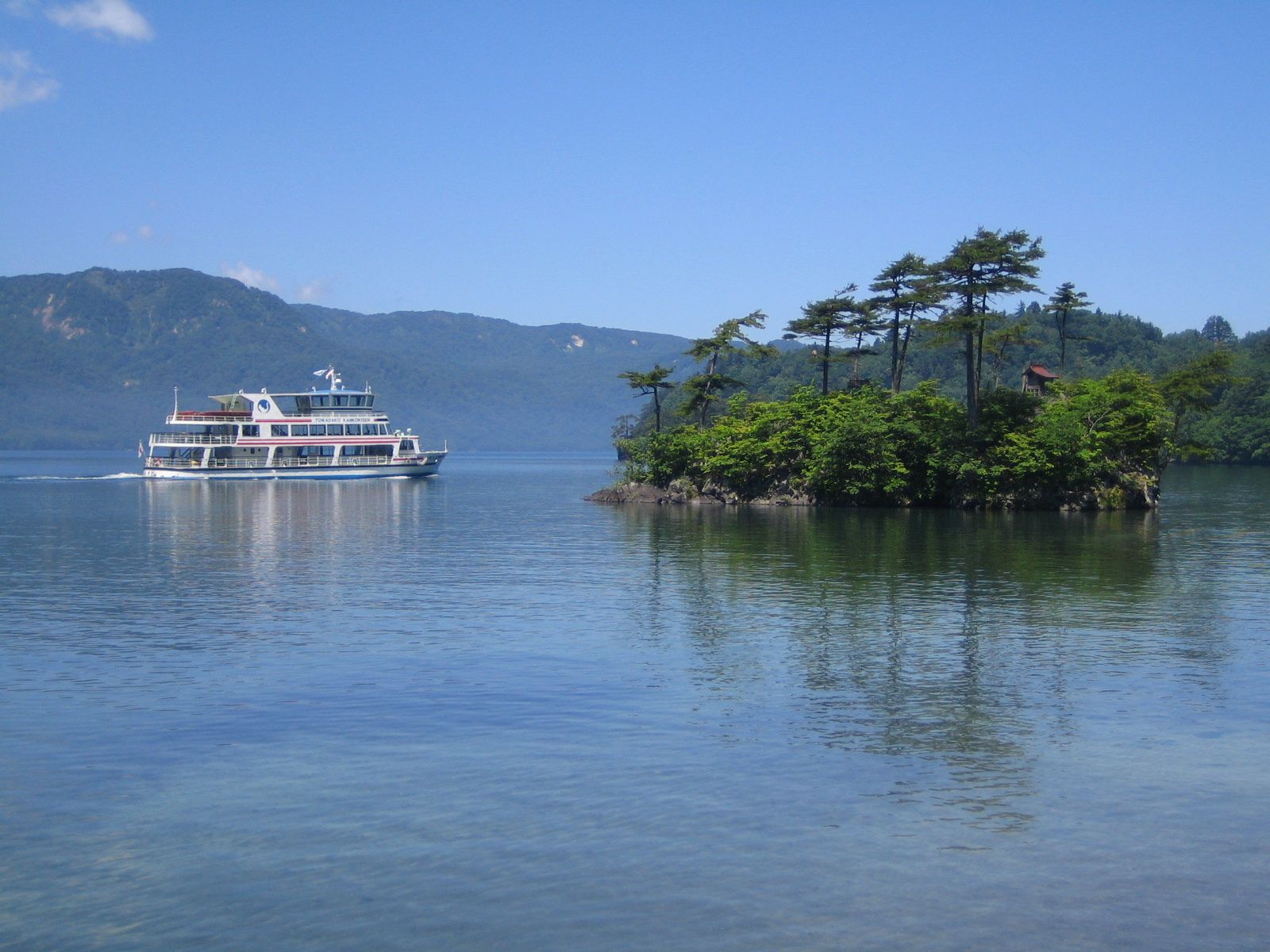
The main lakeside settlement is Yasumiya, on the southern shore, where the boats leave and the Oirase road and the bus routes come in. Nearby are Towada Shrine, set in tall cedars at the base of one peninsula, and a well-known pair of bronze maiden statues on the shore. Sightseeing boats cross the lake between Yasumiya and the Nenokuchi area on the eastern shore in season, and the crossing is a good way to see the peninsulas from the water.
The lake has fishing for himemasu, a landlocked salmon introduced long ago and now a local speciality, in the permitted season. Canoe and kayak tours run in summer; if you paddle on your own, remember that the water is cold, the wind rises in the afternoon, and the shore can be steep and rocky.
Evenings at the lake are quiet. Once the day buses leave, Yasumiya empties, the boats tie up and the water goes still. It is a good time to walk the shore path toward the shrine, watch the last light on the far peninsula, and listen for owls in the forest behind the campground. Stars are bright on clear nights, far from any city glow, so bring a warm jacket and a chair and stay out a while.
Camping along the shore
Several campgrounds sit around the shore, from simple grounds near the water to larger sites with cabins, and some are run by the local municipalities. Pitches tend to be on flat ground under trees, a short walk from the lake. The season usually runs from late spring to autumn, and dates, fees and booking rules change, so check before you go. Autumn weekends, when the leaves turn, fill quickly.
The camping manners are the usual ones. Fires belong in stands, quiet hours start in the evening, and rubbish must be sorted on site or taken home, depending on the ground. Nights by the lake are cool even in summer and can drop close to freezing in October, so bring a warmer sleeping bag than you expect to need. For autumn trips, the guide to autumn leaves from the tent door covers the cold-night gear and the crowds.
Asian black bears live in the forests around the lake and along the Oirase, and they have been seen more often in northern Tohoku in recent years. Keep food and rubbish sealed in your car, never leave anything scented outside the tent, carry a bell on the trails, and follow any warning signs or closures. The bears and mountain safety guide has the details.
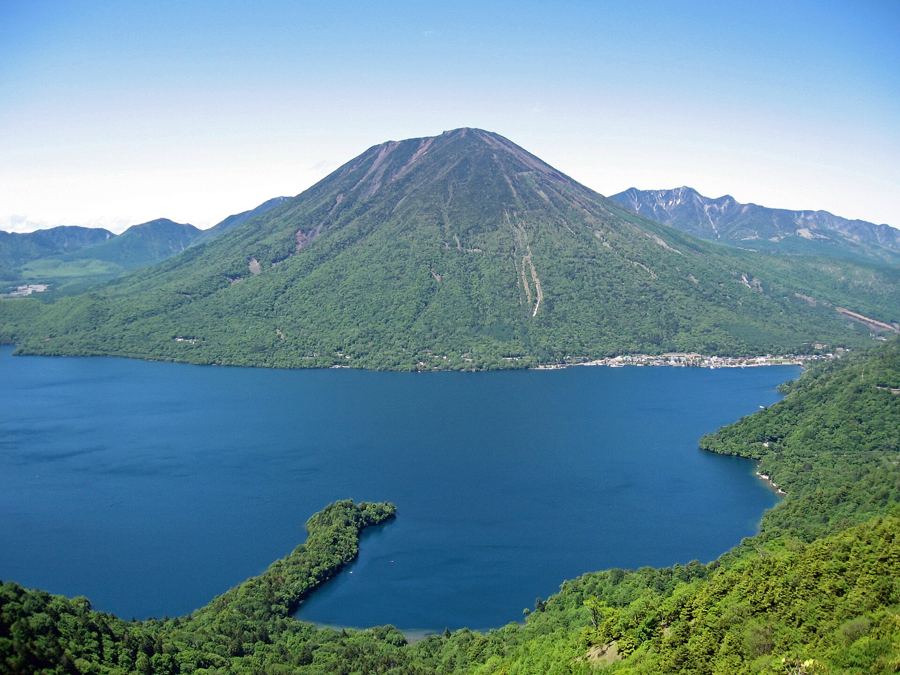 another page in the bookNikko's shrines and the Senjogahara plateau
Walking the Oirase Stream
The Oirase Stream runs for around fourteen kilometres from Nenokuchi on the lake down to Yakeyama, through a gorge of moss-covered boulders, waterfalls and old beech and maple trees. A walking path follows it the whole way, mostly level and easy, often right beside the water. It is one of the best stream walks in Japan, and it is good in every season, not only in autumn.
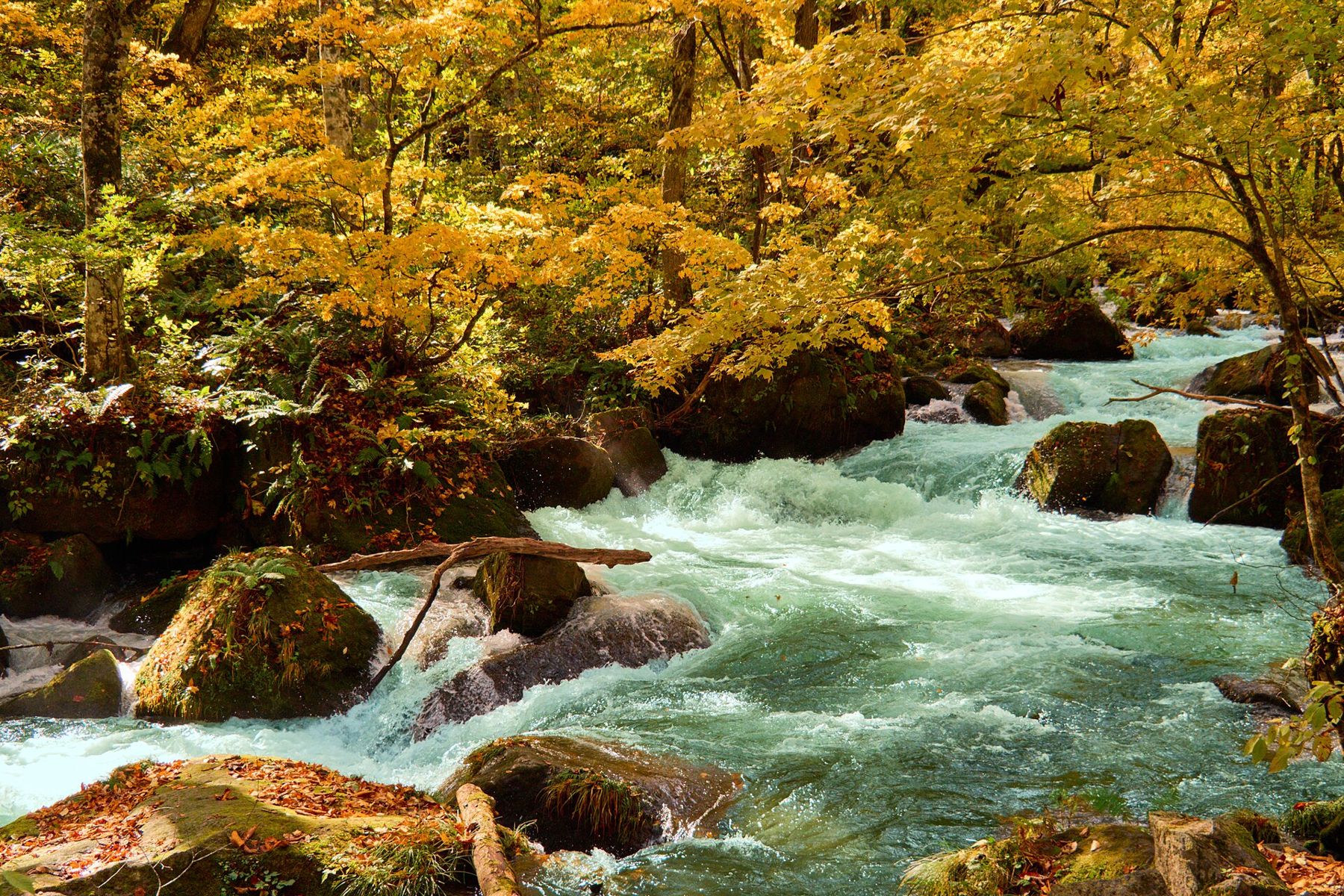
The usual plan is to walk downstream from Nenokuchi, or ride part way and walk the best sections. Buses run along the road beside the stream in season, so you can walk as far as you like and ride back. The whole length takes most of a day at a relaxed pace; the upper half, with the most waterfalls, makes a good half-day. Choshi Otaki, a wide waterfall that blocks fish from swimming up into the lake, is close to the upper end.
Rain does not spoil the walk. On a wet day the moss glows, the waterfalls run full and the path is quieter, so a good rain shell and shoes with grip are all you need. After very heavy rain, sections of the path can close, and the stream turns fast and brown; check before you set out.
The stream is at its most beautiful when you do not hurry. Walk the Oirase slowly, downstream, with the water beside you and the moss in the shade.
Walk the Oirase slowly, downstream, with the water beside you and the moss in the shade.
Stay on the path, which protects the moss and the riverbank, and take everything you bring back out with you. The road beside the stream is narrow and busy in autumn, and on some peak days traffic is restricted, so the bus or a shuttle is often the better choice.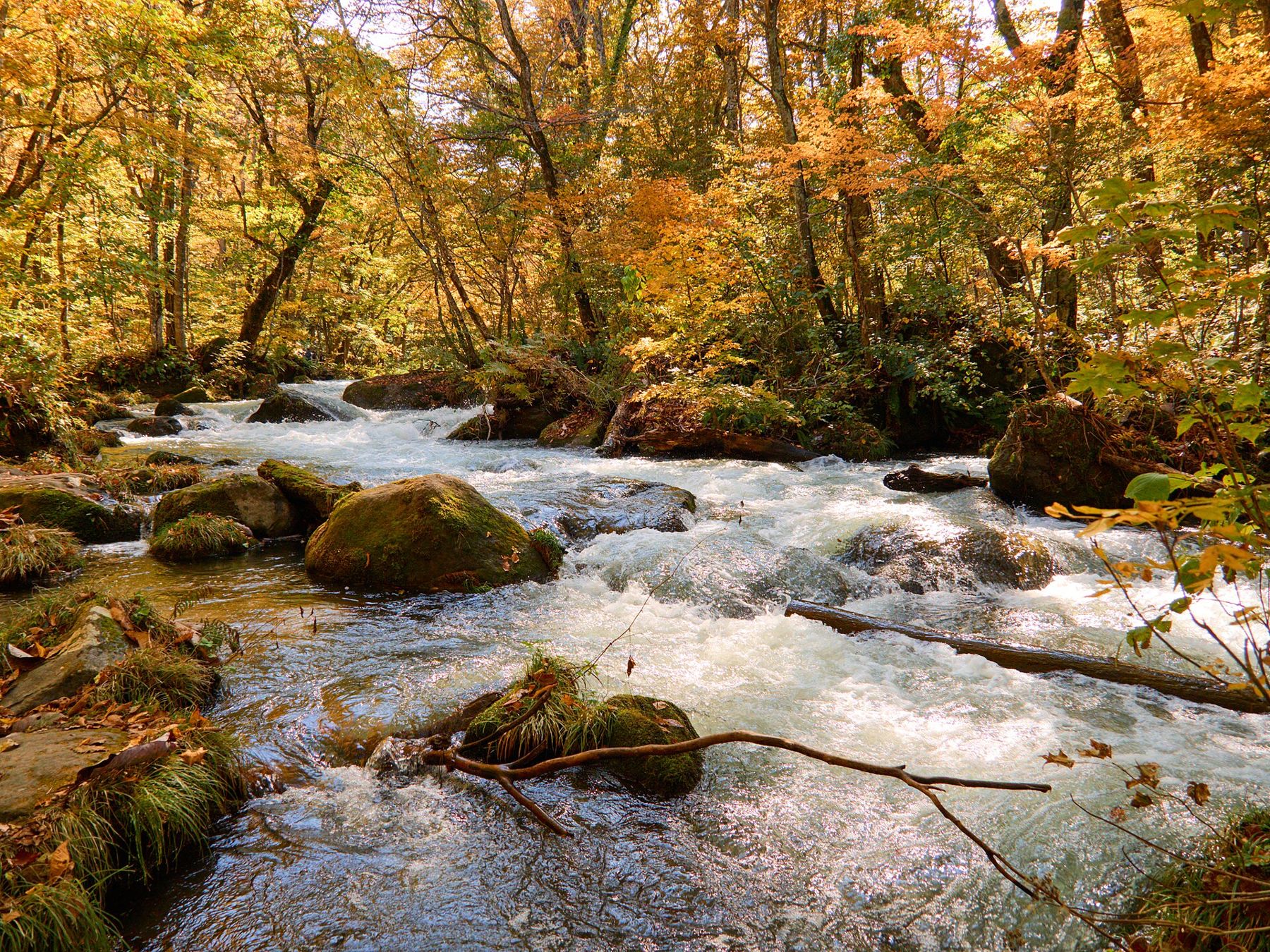
Seasons and weather
Spring comes late here. Snow lingers into April, and the forest turns fresh green in May and June, with fewer visitors than in autumn. Summer is mild and comfortable compared with the cities further south, though rain and mist are common, and the area sees some of tsuyu, the rainy season, in June and July. A good rain shell is worth having all season.
Autumn is the famous season. Koyo, the autumn leaves, usually peaks in mid to late October, starting on the higher ground and moving down toward the lake. The colour along the Oirase is especially strong, and so are the crowds on weekends. In winter the campgrounds close and snow covers the area; the lake itself does not usually freeze over entirely.
After a day on the trail, the hot springs in the mountains around the lake are a reward. The guide to the onsen after the tent explains how to use them well.
Getting there
Lake Towada has no railway. In season, buses run from Aomori Station through the Hakkoda mountains and down the Oirase Stream to Yasumiya, and from Hachinohe and Shichinohe-Towada stations on the Tohoku Shinkansen. Services are limited and largely seasonal, so check timetables before you plan, especially outside summer and autumn. A car gives you much more freedom to reach the campgrounds and the rim lookouts.
Buy food in a larger town before you arrive, since the shops around the lake are small and close early. Then set up camp, walk to the shore as the light fades, and plan an early start on the stream.