How camping works
Auto-camp grounds, free sites and the rules on where you can pitch
Japan has campgrounds for every style, from car-side pitches to mountain hut tent areas. What it does not really have is a culture of pitching wherever you like.
- Best months
- April to November
- Getting there
- Car for most; bus or walk for some
- Pack
- Tent, mallet, fire stand, rubbish bags, cash
Before you go
- Know whether your pitch is marked or a free site
- Confirm the campground allows open fires or needs a stand
- Never pitch in parks, beaches or roadside stations without permission
- Check the season dates; many rural grounds close in winter
- Ask how rubbish is handled before you arrive
- Bring cash; small municipal grounds may not take cards
Camping in Japan is organised. That is good news for a first trip: almost every campground has toilets, running water, a reception or caretaker, and posted rules. It also means the first thing to understand is the kind of place you are booking, because the words on a Japanese campground map do not always mean what an English speaker expects.
Auto-camp grounds: the car beside the tent
The ōto kyampu-jō, or auto-camp ground, is the most common type you will meet. You drive onto your pitch, park next to the tent and unload straight from the boot. Pitches are usually numbered plots called kukaku saito (marked sites), each with a fixed size and sometimes an electrical hook-up, a gravel parking pad and a sink nearby. Larger grounds add a shop window at reception, coin showers, a dish-washing block and a playground.
Because pitches are measured, check the plot size against your tent and tarp. A big family tent plus a living-room tarp can overflow a small plot, and the caretaker will ask you to adjust. Most auto-camp grounds also close the gate overnight, so if you plan an evening at an onsen, find out when cars can still come back in.
Free sites: not free of charge
A furī saito, or free site, is a field without marked plots. You pitch anywhere within the open area, usually on grass, and park in a shared car park that may be a short walk away. The fee is still there; "free" refers to where you put the tent, not the price. Free sites suit small tents and people who arrive by bus or bicycle, and they are often cheaper per head than marked plots.
The trade-off is space and noise. On a holiday weekend a free site fills up shoulder to shoulder, and the best flat ground goes early. Arrive near the start of check-in if you want a choice, and leave a polite gap between your guy lines and the next group's.
Cabins, tent cabins and fixed tents
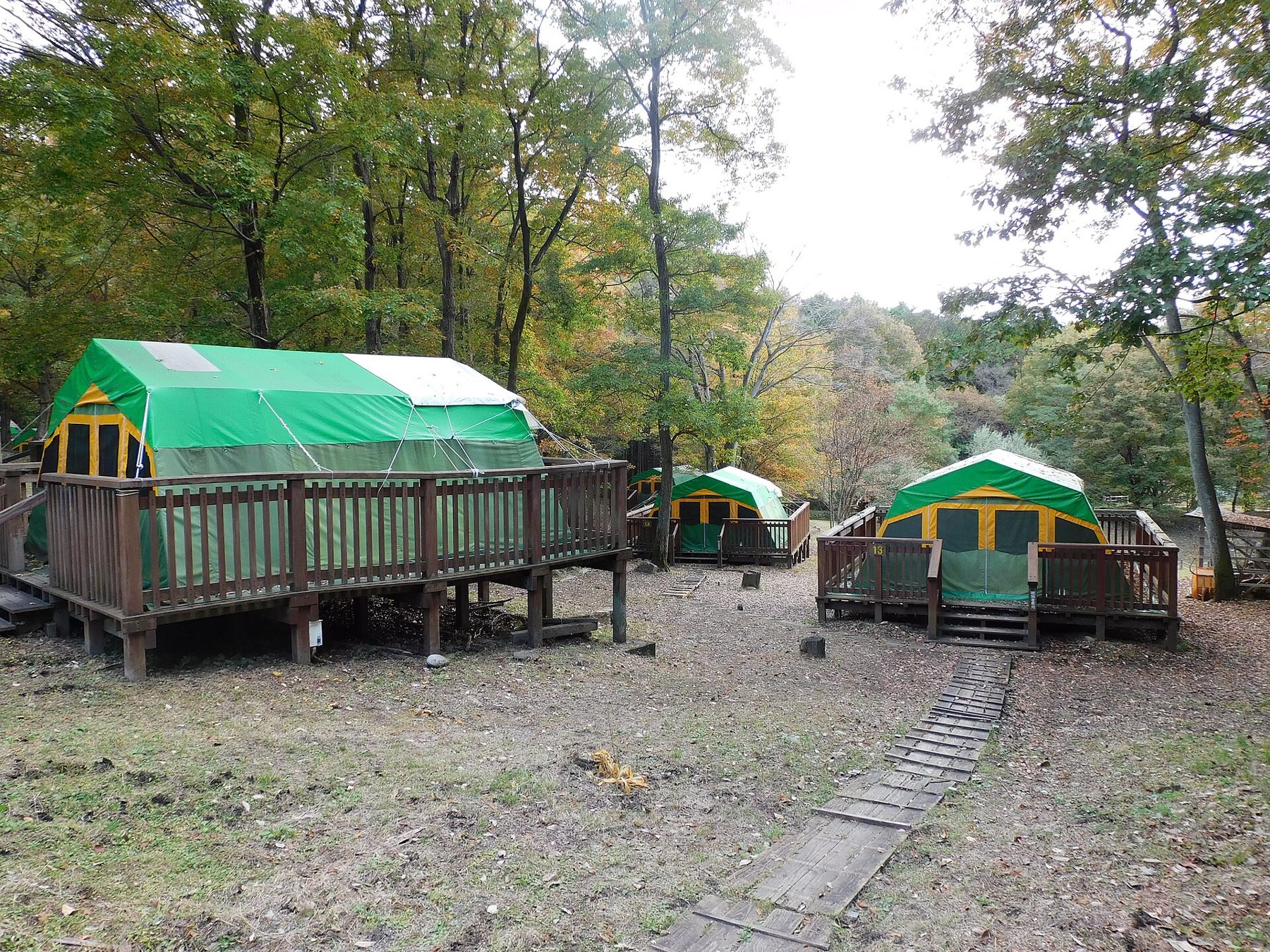
Many campgrounds also rent cottages, log cabins, bungalows or fixed canvas tents on wooden decks, like the ones in the photo at the top of this page. These range from bare rooms with a light and a floor to fully equipped huts with kitchens and bedding. They are a sensible way to try Japanese camping without carrying a tent, and a good fallback in the rainy season. Bedding is not always included, so read the listing or ask what you need to bring.
Municipal and national park grounds
Towns, villages and prefectures run a large share of Japan's campgrounds. These are often simpler and cheaper than private grounds, sometimes free, and some open only for the summer months. A few ask you to apply in advance at the town office or tourist office rather than turning up. Campgrounds inside national parks may be run by local governments or park associations, and they follow the park's rules on fires, vehicles and wildlife.
 another page in the bookBooking, check-in and quiet hours at Japanese campgrounds
In the mountains there is one more type: the tenba, or tent area, beside a mountain hut. In ranges such as the Northern Alps and the Southern Alps, camping away from these designated spots is generally not permitted, and you pay at the hut when you arrive. Spaces are limited and on busy weekends they fill by mid-afternoon. Pack out what you carry in, and expect toilets but little else.
Where wild camping is not allowed
Visitors used to open countryside elsewhere often ask about wild camping. The short answer is to assume you cannot, unless you have clear local permission. Inside national parks, camping is restricted to designated sites in many zones, especially the more protected ones. Many beaches, riverbanks, lakeshores and city parks ban tents by local ordinance, and the signs are usually posted only in Japanese. All other land belongs to someone, and pitching on it without asking is trespass.
Roadside rest stations, the michi-no-eki, are for drivers to rest. A tent, a tarp, a table or a fire in their car parks is not acceptable, and the station staff will move you on. Riverbeds are a special case: some are used informally by local campers, but water can rise quickly after rain upstream or a dam release, and some rivers have warning sirens for that reason. Rules differ from place to place and change, so check locally before you consider anything outside a campground.
The easiest rule of thumb is that a campground with a name, a caretaker and a posted set of rules is where you sleep. Everywhere else is for day walks.
Fires, generators and the posted rules
Most campgrounds forbid jikabi, a fire built directly on the ground. Fires go on a raised fire stand (takibi-dai) with a heat sheet under it, or in a built fire pit where one exists. Many grounds sell firewood at reception, and some do not allow you to bring wood from elsewhere. Ashes go in a dedicated ash bin, not in the burnable rubbish, and never into the grass. More on that in the guide to rubbish and ash.
Generators are banned at most campgrounds, as are loud music and fireworks, though a few grounds allow small handheld fireworks in a designated area in summer. Dogs are welcome at many grounds and banned at others; some have separate pet zones. When in doubt, read the laminated rules sheet you are handed at check-in, or ask. Rules are taken seriously, and staff will remind you of them.
Choosing the right ground for your trip
If you are travelling by car with a family, a marked pitch at an auto-camp ground is the least stressful start. If you are on foot, a free site near a bus stop or a cabin gives you more flexibility; the guide to reaching campgrounds without a car covers the practical side. If you want mountains, a hut tent area in a national park is unbeatable, but plan your days around the hut's arrival times and the weather.
Whatever you choose, check the opening season. Plenty of highland and northern campgrounds close from late autumn to spring because of snow, while others stay open all year for winter campers. Fees, season dates and rules all change, so confirm them with the campground or the local tourist office before you go.