Season: July, August, September
Summer in the highlands
When the cities swelter, Japan's plateaus and mountain valleys stay cool enough for a sleeping bag. Go high, go north, and book early for August.
- Best months
- Mid-July to early September
- Getting there
- Shinkansen to the hills, then local bus
- Pack
- Sleeping bag, fleece, rain shell, sun hat, water bottle
Midsummer in lowland Japan is hot and humid, and nights in Tokyo, Osaka or Nagoya often stay warm enough that sleeping in a tent is miserable. Camping in July and August in Japan is about altitude and latitude. Air cools by roughly six degrees Celsius for every thousand metres you climb, and a campground at a thousand metres or more can be pleasant when the city below is sweltering. Further north, Hokkaido stays cooler still.
Why height matters
The heat that drives people out of the cities is not just high temperatures in the day; it is the nights that never cool. At altitude, the afternoon may still be warm, but the evening drops quickly and you will want a fleece by the campfire stand. Expect to sleep in a proper sleeping bag rather than on top of one.
Height also changes the feel of the day. Mornings in a highland campground are often misty and cool, with dew heavy on the grass and the tent fly wet until the sun reaches it. Middays are bright and the sun is strong at altitude, so sunburn comes quickly even when the air feels mild. Evenings are when the highlands are at their best: the heat goes out of the day, the cicadas of the lowlands give way to quieter insects, and you can sit outside in a fleece without sweating.
Necchusho, heatstroke, is a real risk in the lowlands in summer and still possible higher up on a sunny afternoon. Drink often, carry salt or a sports drink, wear a hat and rest in the shade in the middle of the day. Pay attention to heat warnings for the area you are passing through.
Nasu
The Nasu highlands in Tochigi rise toward Mount Nasu, an active volcano, and their wooded slopes are dotted with campgrounds and hot spring villages. It is one of the easiest highland escapes from Tokyo: the Tohoku Shinkansen runs to Nasushiobara, and buses climb from the stations to the hot spring area. The Nasu Highlands story covers the area in detail.
Nasu is busy in the school holidays from late July, and very busy around Obon in mid August. Weekdays in July are calmer.
Karuizawa and the Yatsugatake country
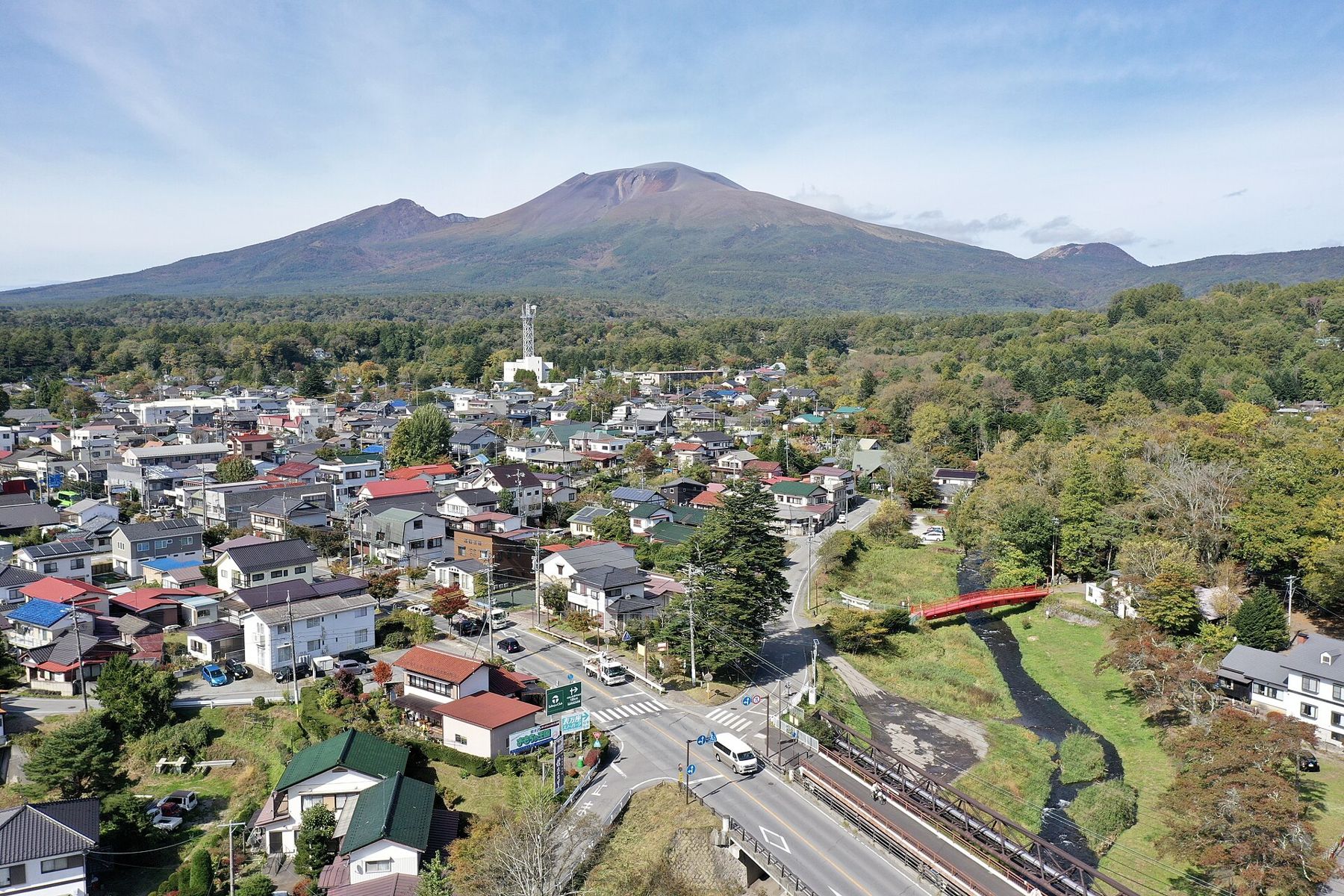
Karuizawa in Nagano sits at around a thousand metres below Mount Asama, another active volcano, and has been a summer retreat since the late nineteenth century. The Hokuriku Shinkansen stops there, which makes it one of the quickest cool places to reach from Tokyo. The town is well known and busy; campgrounds in the surrounding forest and on the slopes beyond are quieter.
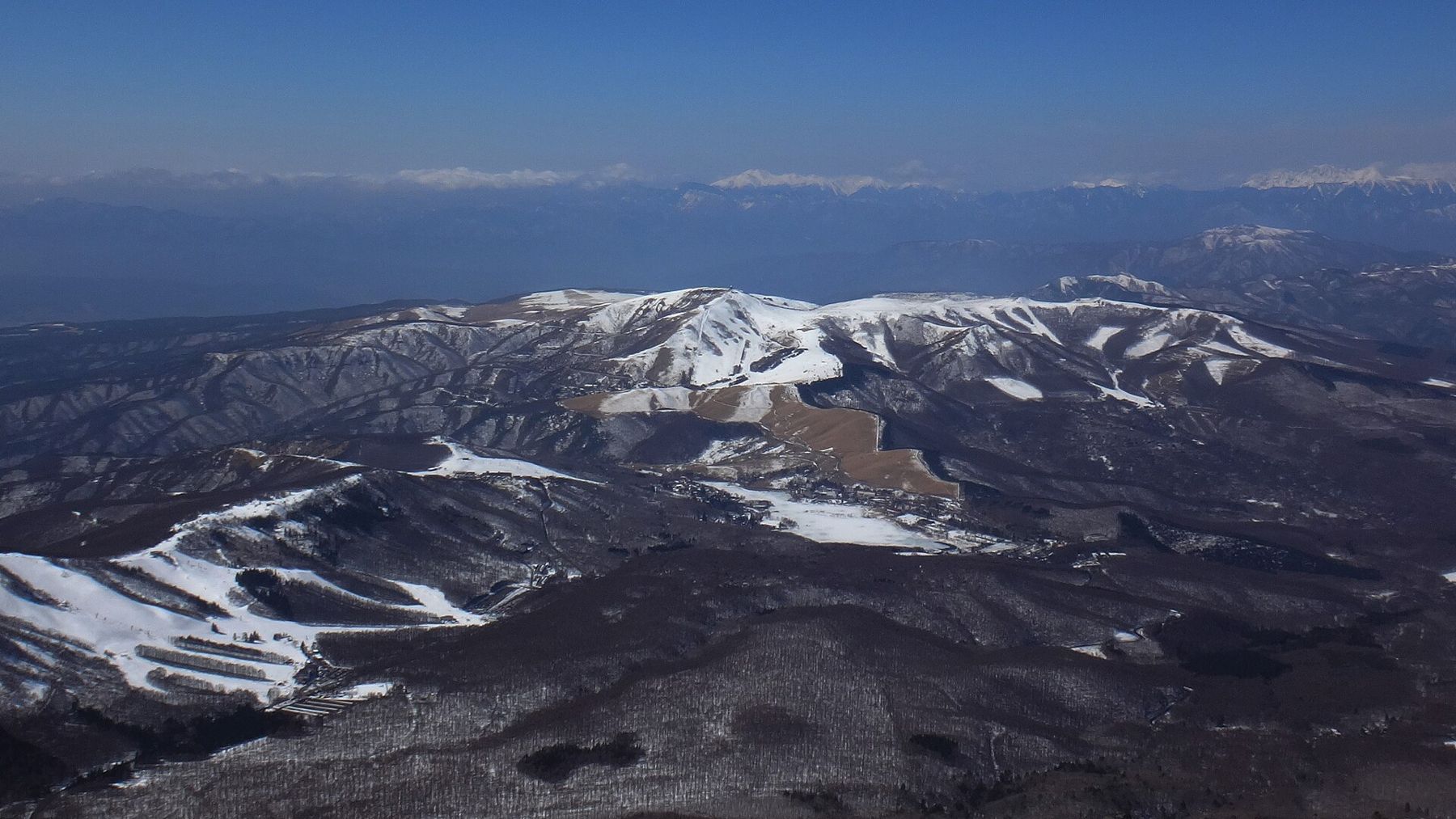
Further west, the Kirigamine plateau and the Yatsugatake range form a wide upland of grassland, larch forest and marsh. In summer the meadows are full of wildflowers, and the plateau is high enough that August nights can feel almost autumnal. The road network is good for drivers; without a car, local buses serve the main points in season, so check timetables before you go.
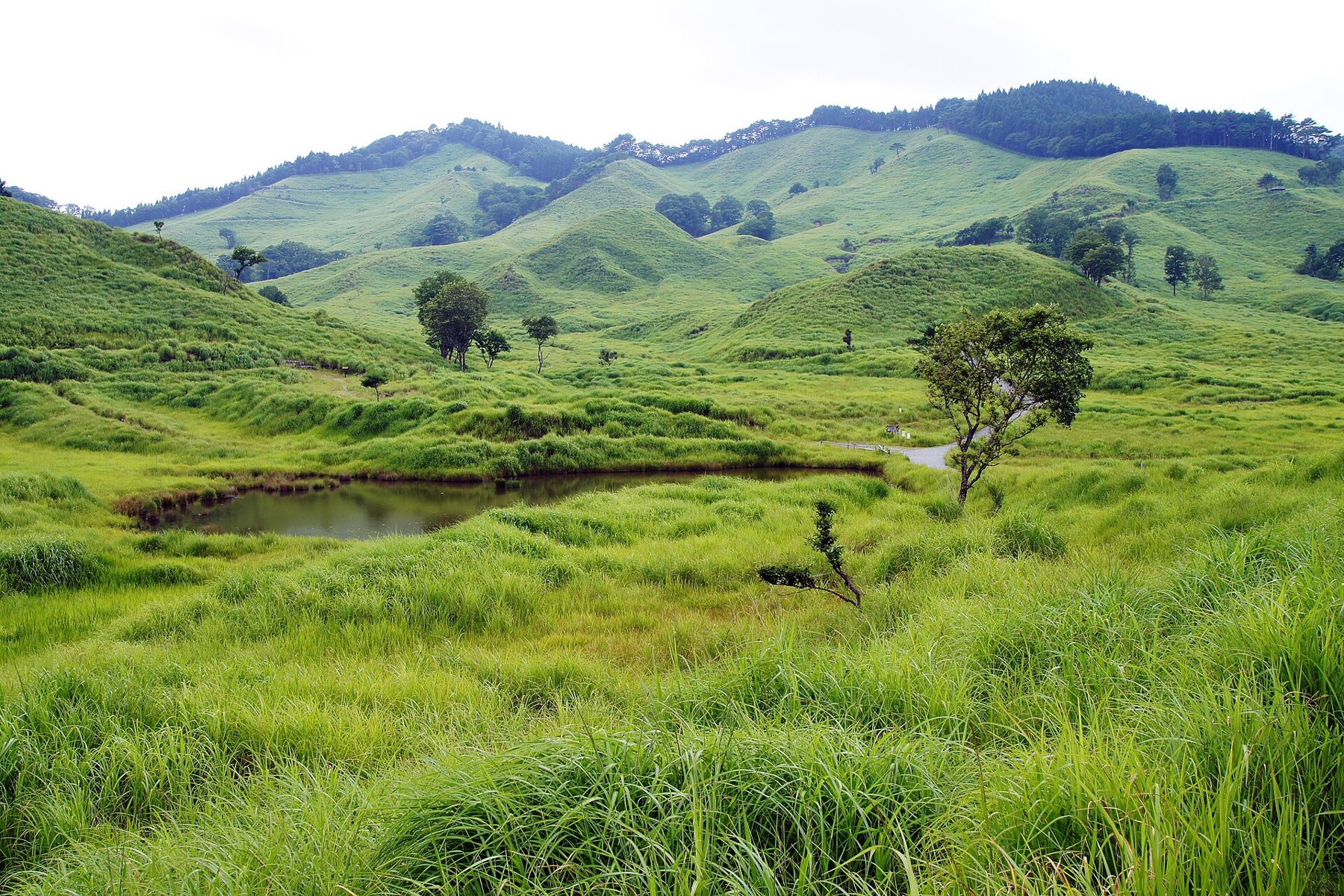
Other prefectures have their own highlands too. In western Japan, the grassy hills of the Tonomine plateau in Hyogo are greenest in summer.
 another page in the bookKamikochi and the Northern Alps
Kamikochi and the Northern Alps
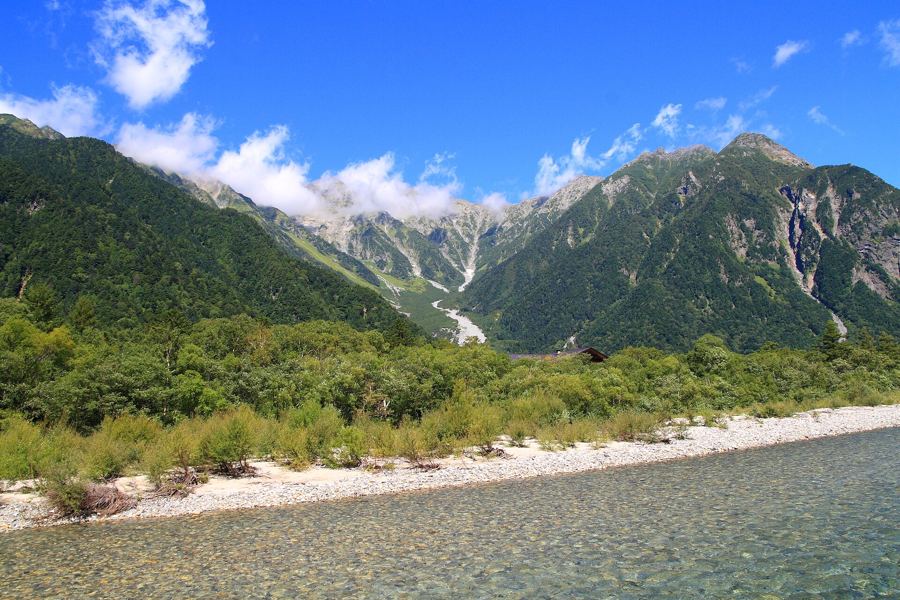
Kamikochi, a valley at about 1,500 metres in the Northern Alps of Nagano, is closed to private cars; you reach it by shuttle bus or taxi from parking areas below. That limit, and the season that runs only from spring to autumn, keep it calmer than its fame suggests. The campground at Konashidaira sits in the forest near the Azusa River. Nights are cool even in August, and the high peaks above can be cold and windy.
The Northern Alps carry real mountain risk. Asian black bears live here, the weather changes quickly, and afternoon storms are common. If you go higher than the valley floor, read up on bears and mountain safety first and follow official warnings.
Hokkaido's cooler air
Hokkaido is the other answer to summer heat. It has no clear rainy season of its own, and July and August are its main camping months. Lakeside campgrounds at Lake Shikotsu near Sapporo, and the wilder country further east, offer cool nights and long evenings. Brown bears live across much of the island, so storage of food and rubbish matters more here than anywhere else in Japan.
Getting there takes longer than reaching the Honshu highlands. Many campers fly to New Chitose Airport near Sapporo and rent a car, or take the ferry from Honshu with their own.
Storms, crowds and timing
Mountain summers bring afternoon thunderstorms. Clouds build over the peaks after midday; by mid afternoon there may be lightning and heavy rain. Plan walks for the morning, be back before the storm builds, and pitch away from lone tall trees.
The late summer typhoon season adds another reason to watch forecasts closely, especially from August onward. A typhoon can close roads and campgrounds for days; most sites will cancel or move bookings when a storm is forecast.
Insects are part of the highland summer too. Horseflies and biting midges can be busy by streams and in grassland, and ticks live in long grass and brush. Wear long trousers on walks, check yourself and your children for ticks after a day outdoors, and bring a repellent.
Highland campgrounds fill fast in the school holidays and around Obon. Book early for August, or choose weekdays and early July. Early September is often the sweet spot, with schools back, nights cool and crowds thinner.