Season: June, July
Camping through the rainy season
Tsuyu brings weeks of grey skies and steady rain to most of Japan in early summer. With a good tarp, a sensible pitch and dry-weather plans, it is quiet, green and very camping-friendly.
- Best months
- Early June to mid-July
- Getting there
- Head north or uphill to escape it
- Pack
- Big tarp, spare pegs, dry bags, quick-dry clothes
Tsuyu, the rainy season, is the stretch of early summer when a band of wet weather settles over much of Japan. It does not mean rain every hour of every day. It means many grey days, frequent drizzle, some heavy downpours and air that never quite dries. Campgrounds are quieter, the forests are at their greenest and hydrangeas bloom along roads and temple paths. If you plan for water rather than hope it will not come, this is a good time to camp.
When tsuyu arrives
The season starts in the south and moves north, and the exact dates change every year. In general:
- Okinawa and the southern islands get it first, usually from around May into June.
- Kyushu, Shikoku and most of Honshu, including Kanto and Kansai, usually see it from early or mid June until somewhere in the second half of July.
- Tohoku follows a little later and often finishes later too.
- Hokkaido has no clear rainy season of its own, though it can still have long wet spells.
The weather agency announces when the season appears to have started and ended for each region, and revises the dates afterwards. Watch the regional forecasts rather than the calendar. The end of tsuyu often brings the heaviest rain of all, sometimes in long bands of thunderstorms over the same area for hours, before the heat of high summer sets in.
Pitching for water
The single most useful thing you can bring is a large tarp, pitched before the tent and big enough to cover a cooking and sitting area. A dry space to eat, change and pack under makes wet days bearable.
- Choose your pitch by looking at the ground, not the view. Avoid hollows, the foot of slopes and any spot where you can see old puddle marks or washed gravel.
- On grass or soil sites, a slight rise drains best. On gravel sites, water runs away quickly; on bare earth, it pools.
- Keep the groundsheet inside the footprint of the tent fly, so rain running off the fly does not collect on it and flow under you.
- Angle one edge of the tarp low so water runs off in one place, away from the tent door, and guy it out tight so it does not pool.
- Bring extra pegs. Soft wet ground lets pegs pull out, and you may want to double up on the windward side.
Wooden decks, which many campgrounds offer, keep a tent off soaked ground and drain well. A lodge or cabin is also worth considering for the wettest nights.
Rivers rise fast
Rain falling far upstream can raise a river within minutes, even when it is not raining where you are. In the rainy season this is the biggest danger of all.
- Never camp on a gravel bar or sandbank in a river. People have died this way in Japan.
- Pitch well above the water and know your route to higher ground.
- Many rivers have dams upstream. Sirens and loudspeaker announcements along the banks warn of water release; if you hear one, move away from the river at once.
- If the water turns muddy, carries branches or starts to rise, leave the bank.
Follow evacuation advice from the local town and the campground staff without waiting to see how bad it gets. Heavy rain warnings also raise the risk of landslides in steep valleys, so read the warnings for the area, not just the forecast.
 another page in the bookSummer in the highlands
Where to go
If you want less rain, go north. Lake Shikotsu and the rest of Hokkaido usually stay drier and cooler through June and July, and early summer there is a fine time to camp. Higher ground on Honshu still gets rain, but nights are cooler and the air dries faster between showers.
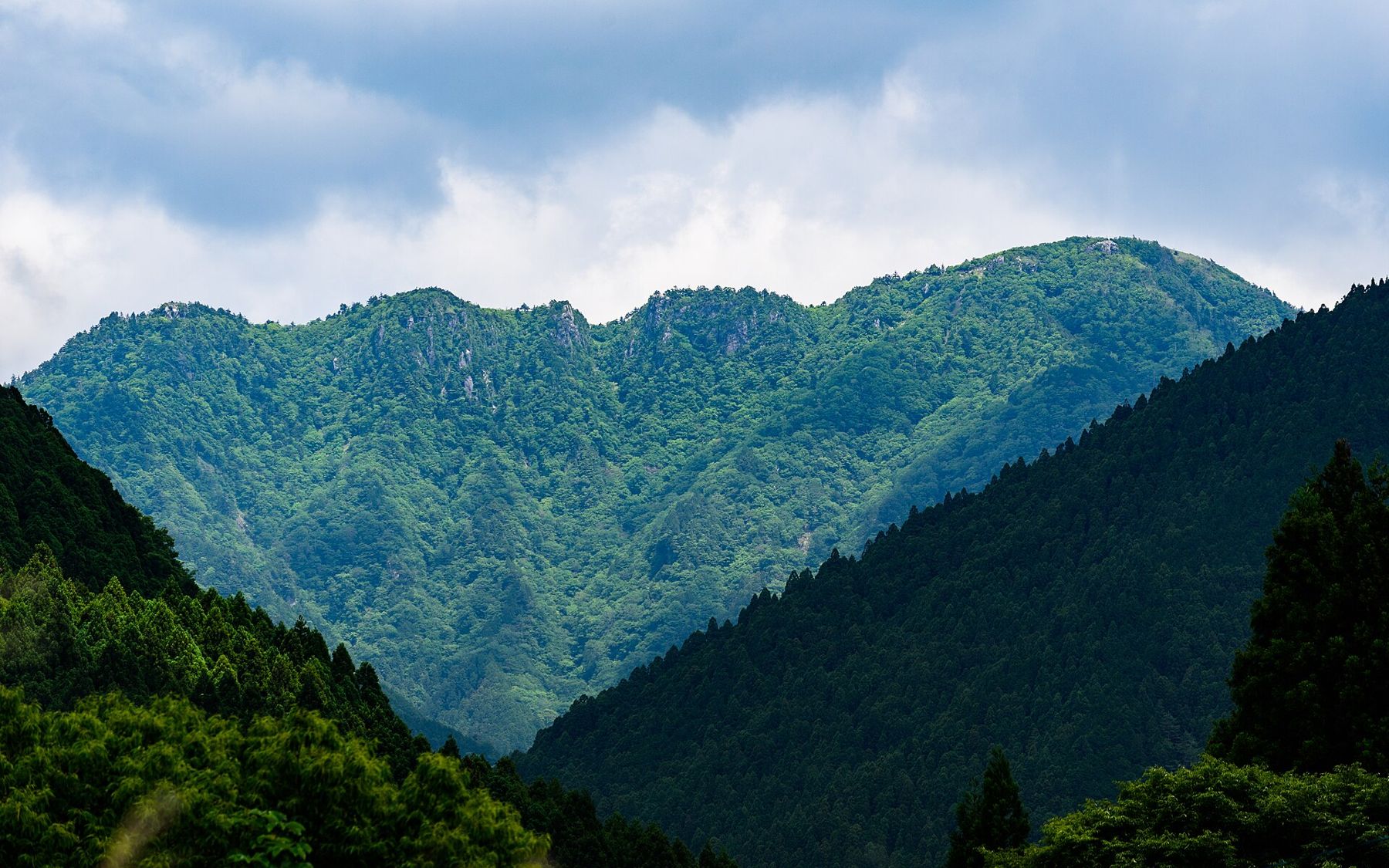
If you want to embrace the wet, the forest is at its best now. Moss gardens, cedar woods and mountain streams look their richest in the rain. Yakushima is wet all year, so the rainy season there is simply a little wetter, and the moss forests reward a rain shell and good boots.
The rainy season also overlaps with the firefly season in many areas. A damp, still evening after the rain stops is often a good one for watching them.
Gear that earns its place
A breathable rain jacket and rain trousers matter more than an umbrella, though a small umbrella is handy for walking to the toilet block. Sandals that can get wet save your boots. Pack clothes in dry bags, keep one set for sleeping that never leaves the tent, and bring a small towel for wiping condensation off the inner tent in the morning.
Many campgrounds sell firewood, but it may be damp in this season. A stove you can use under the tarp, with proper ventilation and away from the fabric, is more reliable than a fire. Fires on stands only, as most sites require, and never under a low tarp.
If you travel without a car, a smaller, lighter kit dries faster on a train journey home. Renting gear near the campground spares you from carrying a wet tent across the city, and the guide to renting gear covers how that works.
Drying out and beating the mould
Japan's early summer is warm and humid, and a tent packed wet will grow mould within days. When you get home, pitch it or hang it somewhere airy until every seam is dry, including the groundsheet and the tarp. Open sleeping bags fully and air them. Wipe mud off zips and let them dry before storing.
On a multi-day trip, use any dry hour to open the tent and air everything. Coin laundries with dryers are common in towns near campgrounds and save a soaked trip. Plan an onsen visit for the end of a wet day; a hot bath and a dry change of clothes reset the mood quickly.